

Newsletter
August 2026
New Beginnings
August is a special month for Logosophy and the Logosophical Foundation. On August 11, we celebrated the 96th Anniversary of this body of knowledge and school dedicated to self-knowledge and the conscious improvement of human life.
In North America, August also marks a season of new beginnings. Children and young people return to school, families reorganize their routines, and, in different ways, we all resume projects, responsibilities, and opportunities for learning.
Amid so much external movement, we invite you to turn your attention inward for a moment and ask yourself:
What are you looking for?
Perhaps you are seeking to understand yourself better. Perhaps you want to live more consciously, improve your relationships with those you love, overcome difficulties, or find answers to situations that seem to repeat themselves in life.
Sometimes we know exactly what we are searching for; at other times, we simply feel an inner concern—a question that has not yet taken shape in words.
What if some of those answers could begin to emerge through a deeper understanding of ourselves?
In this edition, we share experiences and reflections born from this very movement of searching. In one of the personal accounts, Andrea describes how studying and applying the Logosophical method allowed her to understand aspects of her relationships and personal history from a new perspective.
We also present José Moreira’s article, “A Life in Service of Good, Truth, and Eternity”, a homage to González Pecotche, creator of Logosophy, which invites us to reflect on the values capable of guiding human existence.
As we celebrate these 96 years, rather than offering ready-made answers, we would like to leave you with an open question—one that each person can answer in their own time:
What are you looking for in your life?
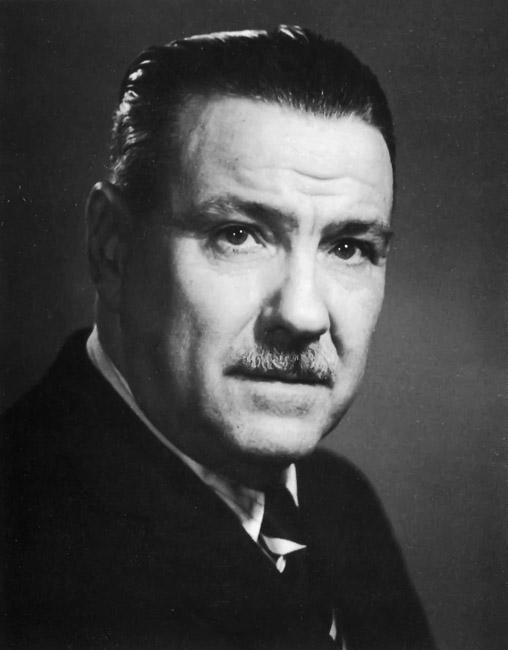
González Pecotche – A Life in Service of Good, Truth, and Eternity
Throughout human history, many human beings have distinguished themselves through the greatness of their ideas, the nobility of their feelings, and their tireless dedication to the common good.
Thanks to their effort, intelligence, and determination to serve, human life has become richer, more dignified, and full of possibilities. Philosophers, scientists, educators, and many other masters have contributed significantly to the progress of humankind in the various fields of its physical life.
Despite these efforts and the great development experienced in recent centuries, we continue to witness a reality that distances human beings from their true identity: their own psychological reality and the connection with their spiritual nature.
Fortunately, today we can affirm that humanity has a true master of wisdom, who dedicated his life to building a legacy that allows human beings to improve their psychological conditions and promote their spiritual evolution.
We are referring to the thinker, humanist, and educator Carlos Bernardo González Pecotche, born in Argentina on August 11, 1901, and who died on April 4, 1963.
From a very young age, González Pecotche dedicated himself to building a work aimed at teaching humankind to undertake a process of conscious evolution, knowing oneself and one’s own spirit.
He created Logosophy, an original science with its own method, extensive bibliography, and teachings that, when applied to life, unite affection with knowledge, promoting the enrichment of the conscience through self-knowledge and the improvement of psychological and spiritual conditions.
He also created the Logosophical Foundation, a school for human self-betterment where Logosophy is studied and practiced; a non-profit institution with essentially cultural and educational objectives, maintained exclusively by its own members.
Follow the content on our website and on our social media channels, and learn more about this true benefactor of humanity and his work.
By José Moreira
Is there a secret to human relations?
Have you ever wondered why relating to others can be so challenging? Why difficulties arise even when our intentions are good? And why, despite our efforts, we sometimes struggle the most with those closest and dearest to us?
“In general, every person expects from others, if not everything, at least 90% and considers excessive the 10% he gives.” (An Introduction to the Logosophical Cognition, González Pecotche, p. 193)
When I first read this passage, it awakened many reflections. I realized how often I had thought and acted this way—believing I was giving more than I received, and quickly reducing my contribution to the relationship. Through the study of Logosophy, I began to understand what my part truly was. By striving to be an example, I changed my position and started cultivating virtues that not only improved my relationships but also expanded them.
I remember with gratitude the period just before I began studying Logosophy. I had started a new job, and the colleagues who had been there longer were not very friendly. I felt sad, as I did not know them and had done nothing to provoke their indifference. Around that time, I encountered Logosophy, and through reading and reflecting on its teachings, I began to experience profound changes.
At work, instead of isolating myself, I chose to help my coworkers and to be more courteous, kind, and friendly. To my surprise, their attitudes soon changed. As I softened my approach and became more helpful, their indifference melted away, replaced by friendship and collaboration. In time, I earned their respect and affection, and we remain close friends to this day.
Human beings have long searched for the secret of happy relationships. Many do not understand why happiness slips through their fingers or why, when least expected, they drift apart.
Logosophy teaches that:
“The relationship and bond between human beings are constituted by a series of elements and facts that are intertwined. It is up to us to maintain them in the manner in which they were first established, otherwise they will be destroyed.” (An Introduction to the Logosophical Cognition, González Pecotche, p. 197)
Human temperament can be touchy and reactive. Yet we all possess the inherent potential to correct our errors, avoid difficulties and soothe reactions. This potential allows us to perceive what others have done in our favor and to appreciate kindness not for its material value, but for its moral and spiritual significance. It becomes a virtue when, aware of the good received, we feel the need to reciprocate the caring attentions once neglected—whether through ignorance or through an inability to understand their meaning.
This aspect has been essential in my life. It has helped me overcome my temperament’s reactions and observe closely the movements that occur in my inner world when facing misunderstandings. The cultivation of a noble sentiment—gratitude—and the use of another inner resource—conscious memory—are inseparable elements for peaceful relationships.
For example, whenever someone says or does something that hurts my feelings or causes a reaction, instead of increasing this reaction or withdrawing, I try to remember all the good things that person has done, their qualities, and the moments we have shared. Rather than focusing on shortcomings, I focus on virtues. With time and patience, I try to show the person that their attitude was not their best, without allowing the bond to be damaged.
For many years, my relationship with my father was not the best. Although we tried to make our moments together bearable, our differing points of view often left us with a bitter feeling inside. Sometimes weeks and months would pass without us calling or seeing each other. I felt sad, lonely, and distant from the person I loved the most.
When I began my Logosophical studies, everything started to change—my way of thinking, feeling, understanding and conceiving life, especially in my relationships. I learned that the first relationship I needed to cultivate was the one with myself. From this inner transformation, I was able to change my conduct toward my father and others. The day I decided to change my thoughts and attitude toward him, our relationship transformed. We began sharing pleasant moments, valuing each encounter as if it were the last, and I became present in his life, conscious of his importance.
One day, I received a phone call from my stepmother telling me that the doctors had discovered my father had a terminal illness and only a few weeks to live. Despite the sadness of his departure, I felt immense peace and gratitude for the opportunity I had to change my behavior toward him while he was still alive.
I have been learning that the secret of human relations is not hidden in others—it is hidden in ourselves. When we transform our inner world, our relationships transform with it.
By Andrea Riddell
“We must always be moral creditors and not debtors; as more beauty is expressed in our gestures, as more loftiness exists in our acts and thoughts, as our words and intentions continue to improve, the more will all this contribute to increase the possession of our happiness. The moments of our life become more grateful as we experience the joy of having created, within ourselves, a serene state of mind having forgiven the offence and spread candidness and goodness everywhere.“
Excerpt from An Introduction to Logosophical Cognition, González Pecotche, p. 287.
Sign up on our website to receive future editions of this newsletter.
Copyright © 2026 – Logosophical Foundation, Inc. – All rights reserved.